


Gongabu, 44600, Nepal
Tibetan Bhavachakra (Bhavachakra) Thangka Painting
$699.00
OVERVIEW
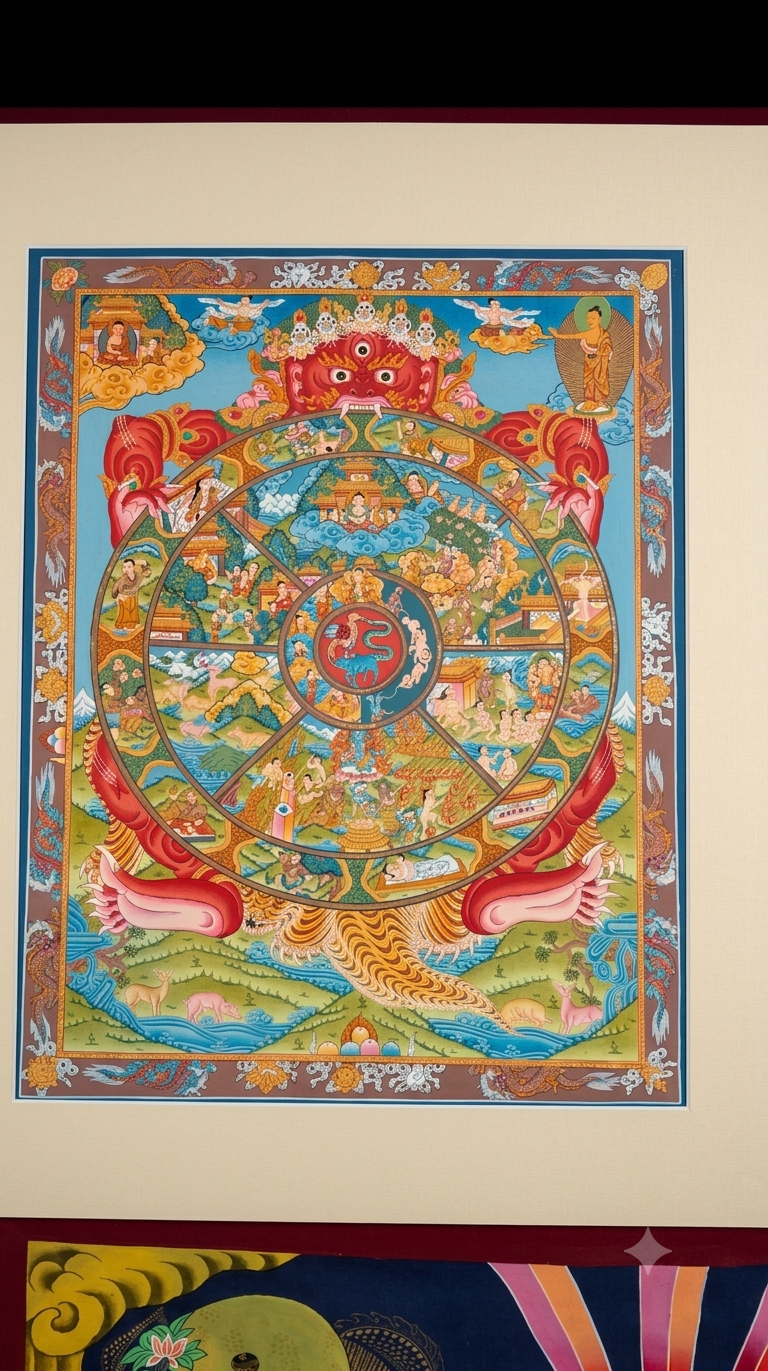
This exquisite and complex thangka depicts the ancient Buddhist concept of the Bhavachakra, also known as the Wheel of Life. Hand-painted by master thangka artists, it uses rich mineral pigments and real 24k gold accents to portray the entire cycle of existence, from suffering to liberation. This thangka serves as a profound teaching tool and a stunning piece of contemplative art.
Core Iconography & Significance:
The thangka is a visual metaphor for the four noble truths and the concept of samsara (cyclic existence). Every element is symbolic.
Yama, the Lord of Death: The central red, multi-eyed monster clutching the entire wheel represents impermanence and death, showing that all existence is under his power.
The Hub (The Root Poisons): In the very center of the wheel are three animals: a pig (ignorance), a snake (anger), and a cock (desire). These are the three root poisons that drive the entire cycle of samsara.
The Second Circle (The Six Realms of Existence): The concentric ring surrounding the hub is divided into six segments, portraying the distinct paths one can be reborn into, each defined by a specific mind-state and suffering.
God Realm (Deva-loka): The top-most realm, full of pleasure but leading to rebirth when karma is exhausted.
Demi-God Realm (Asura-loka): Below the God realm, full of jealousy and conflict.
Human Realm (Manushya-loka): Considered the most precious realm for attaining enlightenment, due to the balance of joy and suffering.
Animal Realm (Tiryaka-loka): Defined by instinct and fear.
Hungry Ghost Realm (Preta-loka): Characterized by constant, insatiable craving and suffering.
Hell Realm (Niraya-loka): The bottom-most realm, depicting various forms of intense suffering.
The Third Circle (The Twelve Links of Dependent Origination): The outer ring depicts detailed vignettes illustrating the twelve dynamic links (Nidānas) that maintain the cycle of suffering, from initial ignorance (often shown as a blind person) to old age and death.
Buddha Shakyamuni: To the upper right, Buddha Shakyamuni stands, pointing to the path of liberation (represented by the moon and a small path/stupa).
The Two Claws: Below the main wheel, two lower claws of Yama hold a detailed scene at the bottom, symbolizing how even the lower realms are part of the vast cycle.
Surrounding Deities and Mandalas: Above the main wheel are other high-ranking deities and various forms of Amitabha Buddha, creating a full celestial context. The borders are decorated with intricate dragon motifs.
RELATED PRODUCTS
REVIEWS
Reviews
There are no reviews yet.